H2: Your Wrist Knows a Lot, but Not Everything
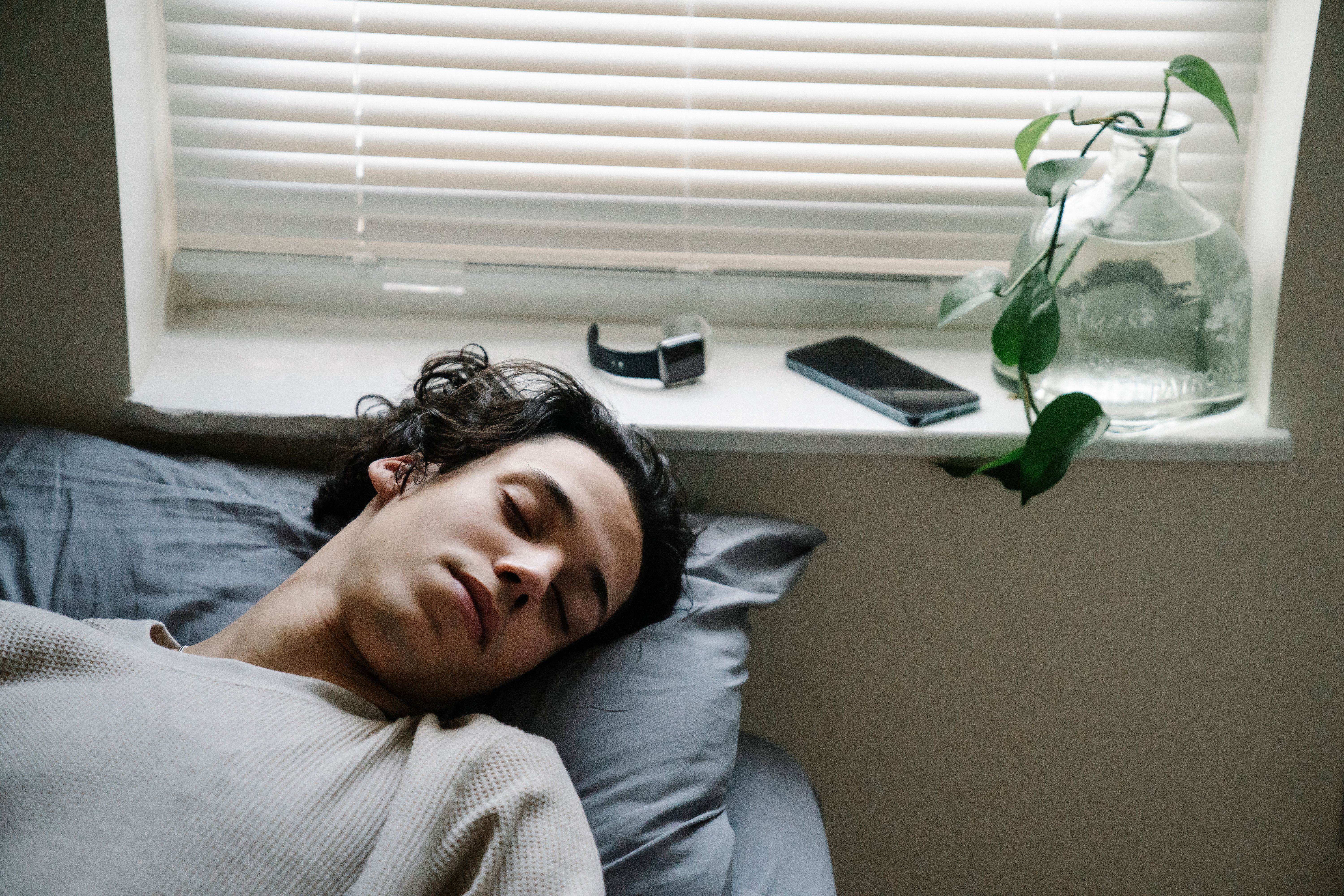
You get up, pick up your phone, and find your smartwatch has already given you a report on your night. 7:42 hours of sleep. Ninety-three percent efficiency. While you were unconscious, it seems you had a meeting on your wrist.
The numbers sound accurate and believable. While sleeping, some smartwatches can monitor various signals, including movement, heart rate, blood oxygen level on certain models, skin temperature and more. Their apps convert those measurements into estimates of total sleep time, awakenings and sleep stages. This may be helpful, but it can appear more definitive than it truly is when it comes at a minute-by-minute rate.
In 2026, a systematic review and meta-analysis of wearable sleep trackers yielded reasonable estimates of general sleep measures, and they may be beneficial for long-term self-tracking. The devices tended to overestimate total sleep time and sleep efficiency, underestimate time awake after sleep onset, and had a large range in the number of sleep stages they could detect. PubMed
So, is it possible to measure the quality of your sleep using a smartwatch? Yes, but it is more skilled at recognizing patterns than an actual sleep laboratory.
How a Smartwatch Estimates Sleep
A smartwatch won't be capable of directly observing your brain oscillating through light, deep, and rapid eye movement (REM) sleep. Rather, it takes a "best guess" based on signals that it can detect from your wrist. Movement is a clue. If you sit for a significant amount of time, the device might think that you are sleeping. Newer watches have optical heart rate sensors using a technology called photoplethysmography, or PPG. The sensors emit light into the skin and measure the volume of blood that flows through the skin with every heartbeat. Algorithms analyze the data of heart rate, movement, temperature, and more to determine sleep onset and transition stages.
Clinical sleep testing is not the same. The polysomnography, or PSG, records brain activity, eye movements, muscle activity, breathing, heart activity, oxygen levels and movement. Those measurements provide a more direct assessment of sleep architecture to the clinician. Your watch likely infers sleep stages based on specific signals. Several physiological events are used to define these stages and are measured by PSG. Imagine the difference between kitchen noise and knowing what's cooking in the kitchen.
Where Smartwatches Perform Well
When it comes to answering the question "Was this person sleeping?" consumer wearables are more likely to provide an answer than the more difficult question of "Which stage of sleep was the person in at 3:17 a.m.?" In 2025, six commercial devices (Apple, Fitbit, Garmin, Whoop, and Withings models) were compared against polysomnography. All six found over 90 percent of sleep periods but were much less successful with the recognition of wakefulness. The agreement on sleep stage classification with PSG was fair to moderate. PubMed
That's why wearables are helpful in regard to trends. If, on many work nights, you spend 6-8 hours sleeping and on many weekend nights you sleep 7-8 hours, it may be telling you something useful. Adjustments to bedtime, waking or length of sleep can also reveal the impact of late-night work, illness, travel and intense exercise on your sleep.
That is the reason one night shouldn't have much impact on your results. Stress, changes in schedule, exercise, room temperatures, illness and a myriad of other factors influence sleep, which is a normal and natural process that fluctuates from day to day. When you compare a few weeks, rather than look at each morning like a report card, a wearable is more informative. The useful question is rarely, "Did I get exactly 54 minutes of deep sleep?" It is more often, "Has something in my sleep pattern changed?"
The advantage is consistency. A sleep lab provides extensive data, but it's not every person with electrodes attached to them sleeping night after night. A comfortable watch can get data for weeks or months. Sometimes, a trend that isn't quite perfect but has a few misplaces is better than a perfectly measured night of self-monitoring.
Sleep Stages Are the Tricky Part
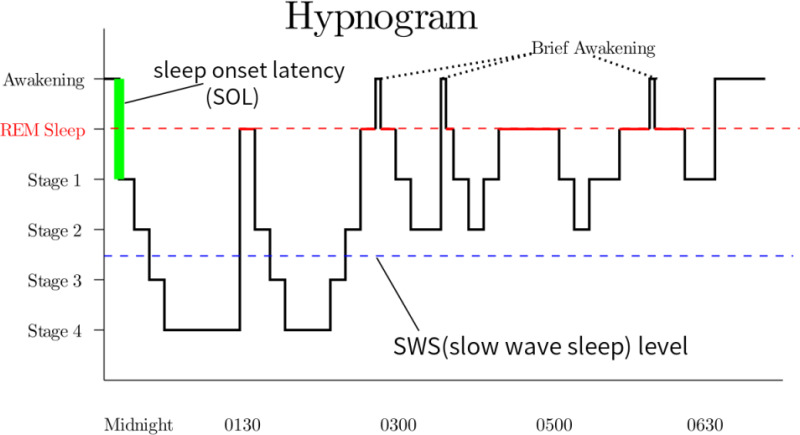
The colored graph of sleep stages is usually the most intriguing aspect of an app that tracks your sleep, and it's also the most suspect. One watch might say you have 62 minutes of deep sleep and 98 minutes of REM sleep. Those figures should not be used as laboratory readings. Sleep-stage algorithms vary from brand to brand, model to model, and software to software, and even two devices worn on the same night can report different sleep stages.
A 2026 study compared the Apple Watch Series 7, the Fitbit Charge 5, and the Polar Vantage M2 with home polysomnography and found only some level of agreement and device-specific biases. Fitbit overestimated light sleep, and Apple Watch underestimated light sleep and overestimated REM sleep. Polar also overestimated REM sleep. These devices were found to be more suitable for longitudinal self-monitoring than clinical sleep architecture assessment. PubMed
This doesn't mean that sleep stages are worthless. It alters your approach to reading them. A single night's score of "poor deep sleep" should not be an indication of a diagnosis and should not be the basis for a morning crisis. Changes over many nights are more significant, particularly if similar to your mood change.
Your Sleep Score Is an Algorithm, Not a Lab Result
A single sleep score is convenient because it compresses a messy night into one number. There are many more ways to compute scores. The duration or regularity of sleep may be the focus of one app, and the number of awakenings, heart rate or estimated sleep stages for another. Therefore, a score of 82 on one platform does not necessarily represent the same on another platform.
It is more useful to look underneath the score. Do you get a regular, adequate night's sleep? Do you find yourself struggling to fall asleep or stay asleep at bedtime? Do you get up a lot during the night? Are you feeling refreshed in the day? Those questions provide some context to the algorithm.
How to Use Sleep Tracking Without Letting It Use You
A smartwatch is not a morning grader; it's a trend detector. Don't obsess over individual nights; consider several weeks. Make comparisons with actual changes. When sleep duration decreases with each late night, that's more of an action plan than a comparison of how many fewer minutes of REM sleep Tuesday had compared to Monday.
Don't let the device disrupt sleep. Turn off unneeded nighttime alerts, use a soft band, and ensure that charging batteries doesn't become another task in gadget management! Most importantly, don't rely on consumer sleep data to make a medical diagnosis or exclude a medical condition. Even if your smartwatch is proclaiming you had a great sleep score, if you are snoring loudly, gasping while sleeping, or experiencing severe daytime sleepiness or chronic insomnia, it's time to seek professional help.
A psychological aspect to tracking is present as well. Sometimes taking a break from the data can be more beneficial than checking the app and getting worried about hitting the numbers. Sleep is one of the rare areas where trying desperately to perform well can become part of the problem.
What Your Smartwatch Can Actually Tell You
Smartwatches have come a long way to be such an amazing sleep buddy. They can help you guess your sleeping window, show you any long-term patterns, and help you see the links between your habits and your sleep. Their convenience brings with it something that clinical equipment can't offer readily: months of normal life data.
The only thing they cannot do is make a few wrist sensors into a sleep lab. It is usually better to use total sleep time and broad sleep-wake patterns rather than relying on each estimate of sleep stage. Most effective is to use the watch as a context, trend and curiosity tool, but rely on clinical tools for diagnosis. If you like it, then check your sleep score. Just keep in mind that your watch didn't spend the night studying medicine but rather making calculations.
- Are Wearable Sleep-Tracking Devices Reliable Alternatives to Polysomnography? A Systematic Review and Meta-Analysis — Behavioral Sleep Medicine, Taylor & Francis
- A Performance Validation of Six Commercial Wrist-Worn Wearable Sleep-Tracking Devices for Sleep Stage Scoring Compared to Polysomnography — SLEEP Advances, Oxford University Press on behalf of the Sleep Research Society
- Performance of Three Consumer Sleep-Tracking Devices Compared With Actigraphy and Polysomnography — Sleep Medicine, Elsevier