Your Cash Has More Than One Parking Spot
Keeping cash sounds simple until you try to decide where it should live. A checking account is convenient, but leaving a large balance there can mean earning very little interest. At the other extreme, investing money you may need next month can turn an emergency fund into an unwanted lesson in market timing.
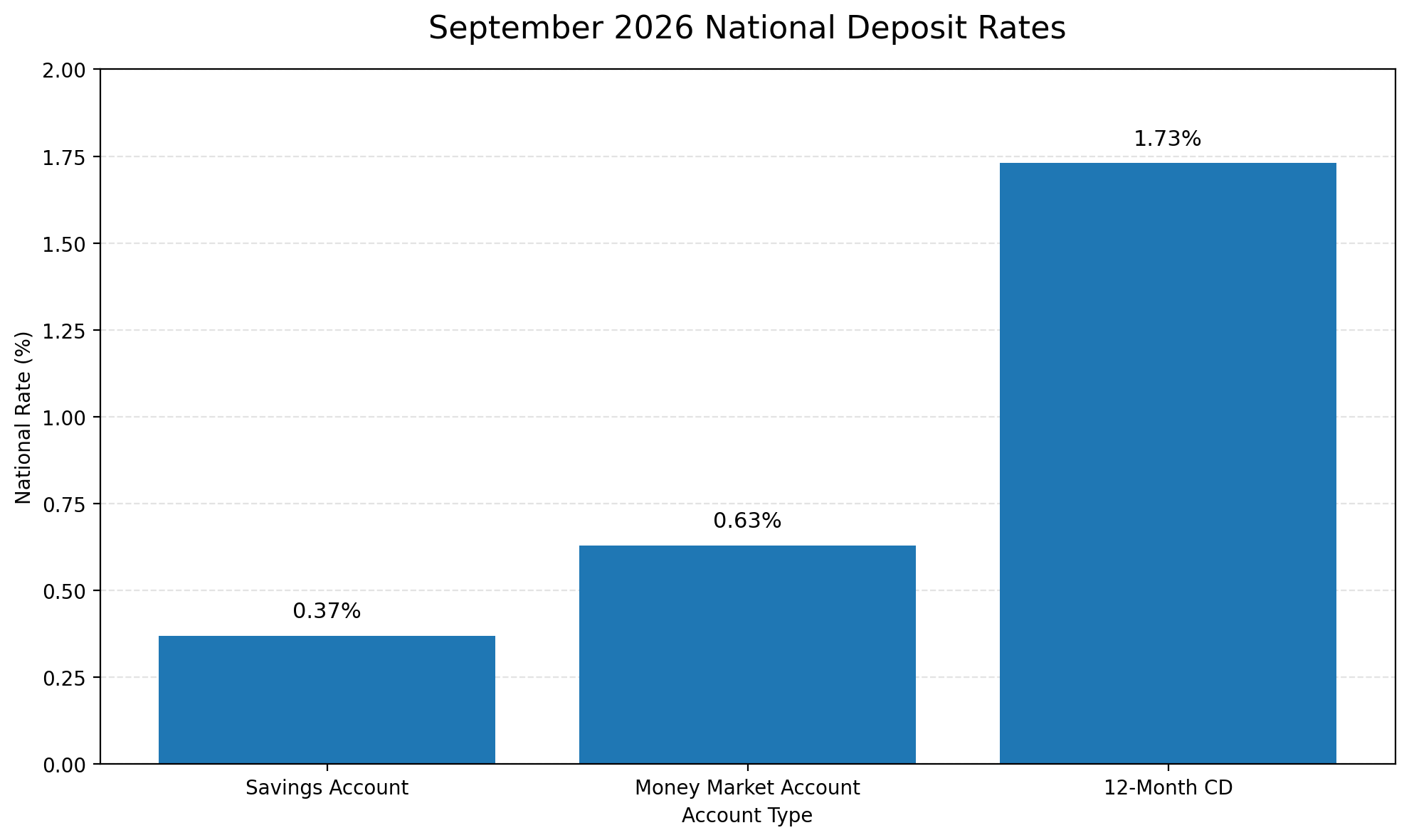
That is where high-yield savings accounts, money market accounts, and certificates of deposit come in. All three can help cash earn interest without taking stock-market risk, but they handle access, rates, and commitment differently. In September 2026, national average rates were 0.37% for savings accounts, 0.63% for money market accounts, and 1.73% for 12-month CDs. Those are broad averages rather than the best available offers, which is exactly why shopping around matters. FRED
The right choice depends less on which account sounds sophisticated and more on one question: when might you need the money?
How a High-Yield Savings Account Works
A high-yield savings account, or HYSA, works much like an ordinary savings account but generally offers a more competitive annual percentage yield, or APY. Many of the strongest offers come from online banks, which often have lower overhead than institutions maintaining large branch networks.
Its biggest advantage is flexibility. You can deposit money, earn a variable rate, and usually transfer funds when needed without committing them for a fixed term. That makes an HYSA useful for emergency savings, tax money, a home down payment, or another goal with an uncertain spending date.
The trade-off is that the rate can change. Banks can raise or lower savings APYs as market conditions and their funding needs change. If rates fall after you open the account, your return can fall too. You should also check for monthly fees, minimum balances, transfer times, and withdrawal policies rather than being hypnotized by the largest APY on the page. A flashy rate loses some sparkle if you need to complete six financial gymnastics routines to qualify for it.
When a Money Market Account Makes Sense
A money market account, or MMA, sits somewhere between savings and checking. It earns interest like a savings account, but many MMAs offer easier spending access through checks or a debit card. That can be useful when you want your cash earning interest while remaining available for occasional large expenses.
Do not confuse a money market deposit account with a money market mutual fund. The names are frustratingly similar, but the products are different. Savings accounts, bank MMAs, and CDs can all qualify for FDIC insurance when held at an FDIC-insured bank. The standard coverage is $250,000 per depositor, per insured bank, for each ownership category. FDIC
An MMA can work well for money you expect to use occasionally, such as a home repair fund or annual property-tax reserve. The catch is that some accounts require larger balances to earn the advertised yield or avoid fees. If an MMA pays roughly the same as an HYSA but imposes a high minimum balance, the extra check-writing convenience needs to be genuinely useful.
Why CDs Trade Flexibility for Certainty
A certificate of deposit asks you to make a deal with the bank: leave your money untouched for a specified term, and the bank generally gives you a fixed interest rate for that period. Terms can range from a few months to several years. The attraction is certainty. If you lock a competitive rate for 12 months, a later drop in savings rates does not reduce that CD's agreed return. This makes CDs useful for money attached to a known future date, such as tuition due next year or a planned purchase several months away.
Access is the weakness. The Consumer Financial Protection Bureau notes that withdrawing from a traditional CD before maturity generally triggers an early withdrawal penalty. Penalties vary, so two CDs advertising similar APYs may not be equally attractive. One way to reduce the lockup problem is a CD ladder. Instead of placing $12,000 into one 12-month CD, for example, you could divide it among CDs with different maturity dates. As each matures, you regain access to part of the cash and can decide whether to spend or reinvest it.
HYSA vs Money Market Account vs CD
The products become easier to compare when you focus on what you are giving up in exchange for yield.
| Feature | High-Yield Savings | Money Market Account | CD |
|---|---|---|---|
| Rate type | Usually variable | Usually variable | Usually fixed |
| Access to cash | High | High, often with checks or debit card | Limited until maturity |
| Early withdrawal penalty | Usually no | Usually no | Common |
| Best use | Emergency funds and flexible goals | Accessible cash with occasional spending | Money with a known future date |
| Main drawback | APY can fall | Balance requirements or fees may apply | Cash is less liquid |
None is automatically superior. If two accounts offer similar yields, access and account terms may matter more than squeezing out another fraction of a percentage point. On $10,000, an extra 0.25 percentage point equals about $25 over a year before compounding and taxes. That is useful money, but probably not enough to justify locking away your emergency fund.
Where Should You Keep Different Types of Cash?
Start with purpose. An emergency fund generally belongs somewhere liquid, which makes an HYSA a natural fit. You do not know when the car, boiler, tooth, or other expensive object will suddenly develop ambitions for your paycheck. A money market account can make sense when you want similar liquidity but value check-writing or debit-card access. It may also suit larger short-term balances if the institution rewards higher balances with better rates.
A CD becomes more attractive when you know you will not need the money before a particular date. The fixed rate removes uncertainty, while the maturity date gives the savings goal a built-in timetable. You also do not have to choose only one. A practical setup could keep three to six months of essential expenses in an HYSA, maintain planned near-term spending in an MMA, and place cash for known future expenses into CDs. The accounts can work together rather than auditioning for one winner-takes-all role.
Before opening anything, compare APY, minimum balances, monthly fees, withdrawal rules, CD penalties, transfer speed, and deposit insurance. For balances above insurance limits, pay attention to ownership categories and how much you hold at each institution.
Bottom Line
The best place for cash is the account that matches when you expect to use it. High-yield savings accounts offer the strongest all-purpose combination of accessibility and interest for many savers. Money market accounts add transaction convenience, while CDs exchange liquidity for a fixed rate and predictable return.
Rates will change, sometimes just after you congratulate yourself for finding the perfect account. That is normal. Rather than chasing every small APY movement, build a cash system around access, safety, and timing, then compare competitive rates within the product that fits the job.
Your emergency fund does not need to win a financial beauty contest. It needs to be safe, earning something respectable, and available when life inevitably sends an invoice.